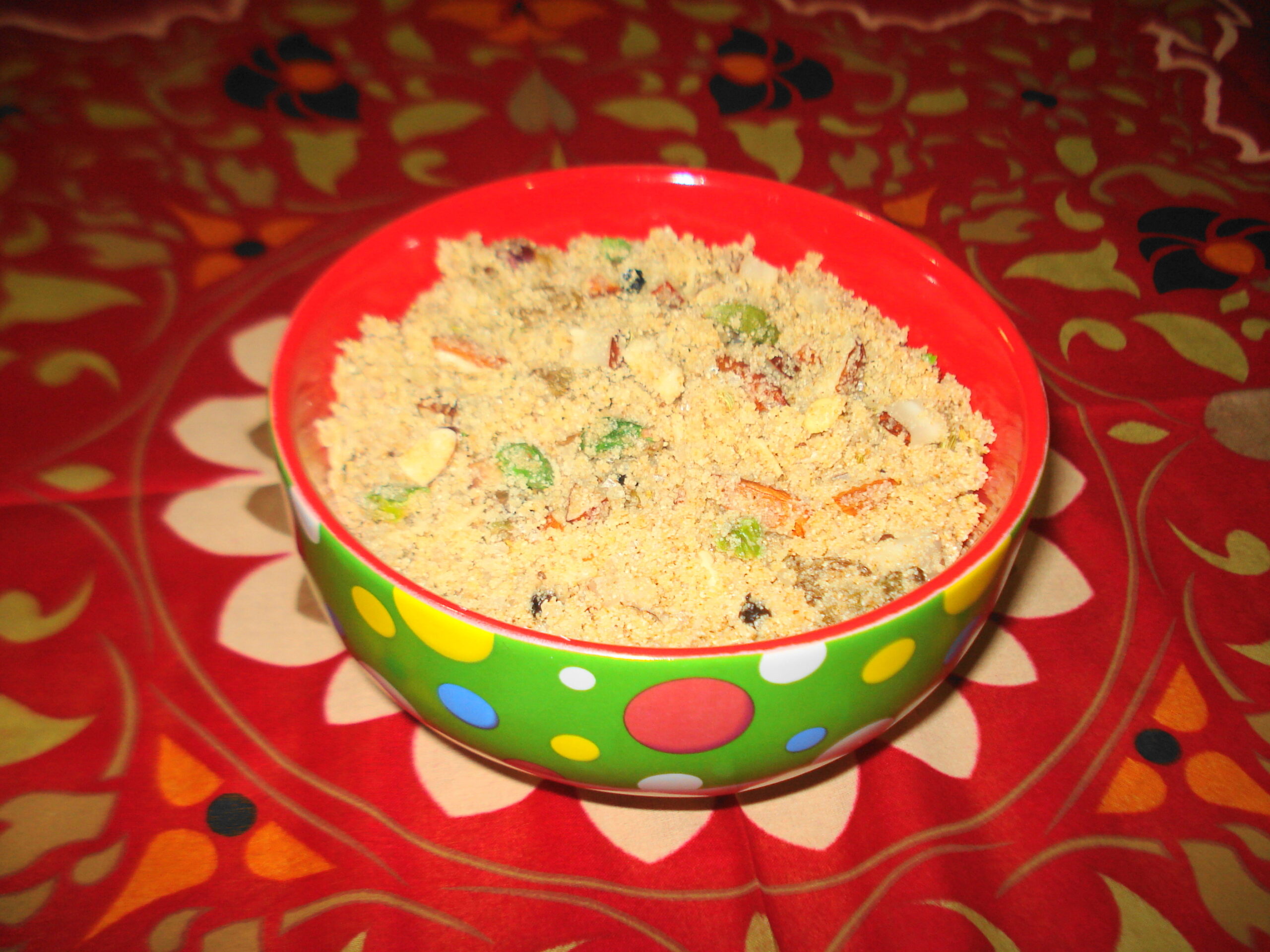
Panjiri came up during my Fourth Trimester Podcast conversation with Dinalynn Rosenbush. She remembered a Pakistani mother making it for a new parent, and after we recorded, Dinalynn shared the family recipe she had learned from that Pakistani friend.
This recipe makes a lot of Panjiri, about 40 small servings. You can cut it in half if that seems like too much, or freeze some of the finished Panjiri in an airtight container for later. The ingredients include edible gum, phool makhana, nuts, seeds, coconut, cardamom, and semolina or another flour, all toasted in ghee.
Each ingredient is toasted separately, so there’s a lot of love that goes into this one. Set out several bowls before you start. Once everything is toasted and combined, let the Panjiri cool completely before transferring it to an airtight container. Keep it in a cool, dry place or freeze some for later.
Dinalynn’s original notes call for a “scoop” of ghee. We use about 1/4 cup, or 4 tablespoons, as a practical starting point. What matters is having enough to coat the pan and toast the ingredients without scorching them, so use your eyes and adjust as needed.
If you are bringing this to someone else, label it clearly. This recipe contains ghee, nuts, seeds, sesame, edible gum, and either semolina or another flour. Ask about allergies and food preferences before you start.
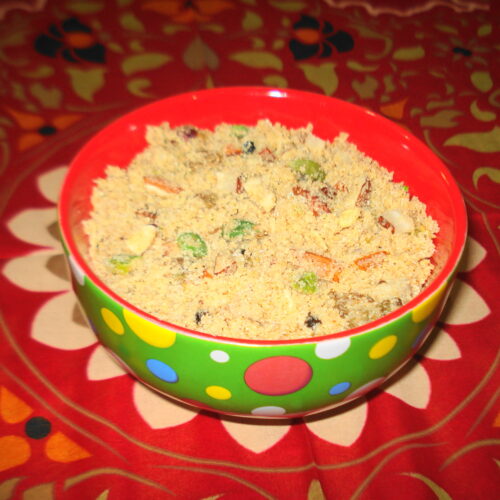
Panjeri (Panjiri) Recipe - A Warming Postpartum Sweet
Ingredients
- 1 scoop ghee about 1/4 cup or 4 tablespoons, for edible gum
- 2 packages edible gum also called gond
- 1 scoop ghee about 1/4 cup or 4 tablespoons, for fox nuts
- 4 cups fox nuts phool makhana
- 1 cup raw cashews or to taste
- 5 to 6 green cardamom pods seeds removed
- 2 cups raw blanched almonds
- 2 cups walnuts
- 1 cup pistachios
- 200 grams melon seeds
- 100 grams sesame seeds
- 200 grams coconut powder
- 400 grams semolina, amaranth flour, or cassava flour rajgira/amaranth or singoda/cassava are options
- 1 scoop ghee about 1/4 cup or 4 tablespoons, for the flour mixture
- powdered sugar, jaggery powder, chopped dates, or raisins optional, to taste
Instructions
- Set out separate bowls or trays before starting. Panjeri is roasted in batches, and each ingredient should be stirred continuously while it cooks.
- Warm 1 scoop ghee over medium-high heat. Add the edible gum and stir continuously until the pieces turn white, puff up, and fill with air. Transfer to a bowl and crush lightly once cool.
- Add another scoop of ghee to the pan. Add the fox nuts and cook over medium-high heat, stirring continuously, until crisp. Transfer out of the pan.
- Lower the heat. Toast the raw cashews and cardamom seeds gently until fragrant, then transfer out of the pan.
- Toast the almonds over medium-low heat until they barely begin to change color. Transfer out, then toast the walnuts until crisp and the pistachios until hot and fragrant.
- Toast the melon seeds over low heat until crisp and lightly brown, then toast the sesame seeds on low. Keep each batch moving and transfer it out as soon as it is done.
- Toast the coconut powder briefly on low, stirring constantly so it does not scorch.
- Toast the semolina, amaranth flour, or cassava flour over medium-low heat until hot and slightly darker in color. Add 1 scoop ghee and mash or stir it through until evenly coated and fragrant.
- Combine the roasted flour mixture, crushed edible gum, fox nuts, nuts, seeds, coconut, and cardamom in a very large bowl.
- If using powdered sugar, jaggery powder, chopped dates, or raisins, let the mixture cool until warm rather than hot, then mix in the sweetener to taste.
- Cool completely and store in an airtight container. Serve in small spoonfuls.
Notes
The Story Behind This Panjiri Recipe
I keep coming back to the person in Dinalynn’s story who knew what to make and brought it over. That is postpartum support in action. Feed the person who just had a baby, and if you can, bring enough to share.
Listen to the conversation that inspired this recipe: Your Baby’s Brain Works Differently Than Yours — How Early Communication Supports Future Success.
For more easy food you can make ahead and share, browse the Postpartum Snack Tray collection.
The content provided in this article(s) is provided for informational purposes only and does not constitute medical or other professional advice. Neither Sarah Trott nor Fourth Trimester Media Group LLC are liable for claims arising from the use of or reliance on information contained in this article.