The transition to motherhood can be joyful and disorienting at the same time. A new baby may change your routines, relationships, responsibilities, body, priorities, and sense of self. When those changes are treated as separate problems, it is easy to miss the larger truth: becoming a mother is a major life transition.
The Transition to Motherhood: The Short Answer
The transition to motherhood is an ongoing process of physical, emotional, social, practical, and identity change. It begins before or around the arrival of a child, but it does not necessarily end after the newborn months. New stages of a child’s life, changes in work or relationships, and shifts in available support can all ask a mother to adapt again.
This process is often called matrescence. The word offers a way to understand the whole transition without assuming that every difficult feeling means something has gone wrong.
Why Mixed Feelings Can Be Part of the Change
Love for a child can coexist with uncertainty, frustration, grief for a former life, or a desire for more independence. One feeling does not cancel out another.
Naming this complexity can reduce the pressure to perform a single, uncomplicated version of motherhood. It can also make conversations with partners, friends, and care professionals more honest and specific.
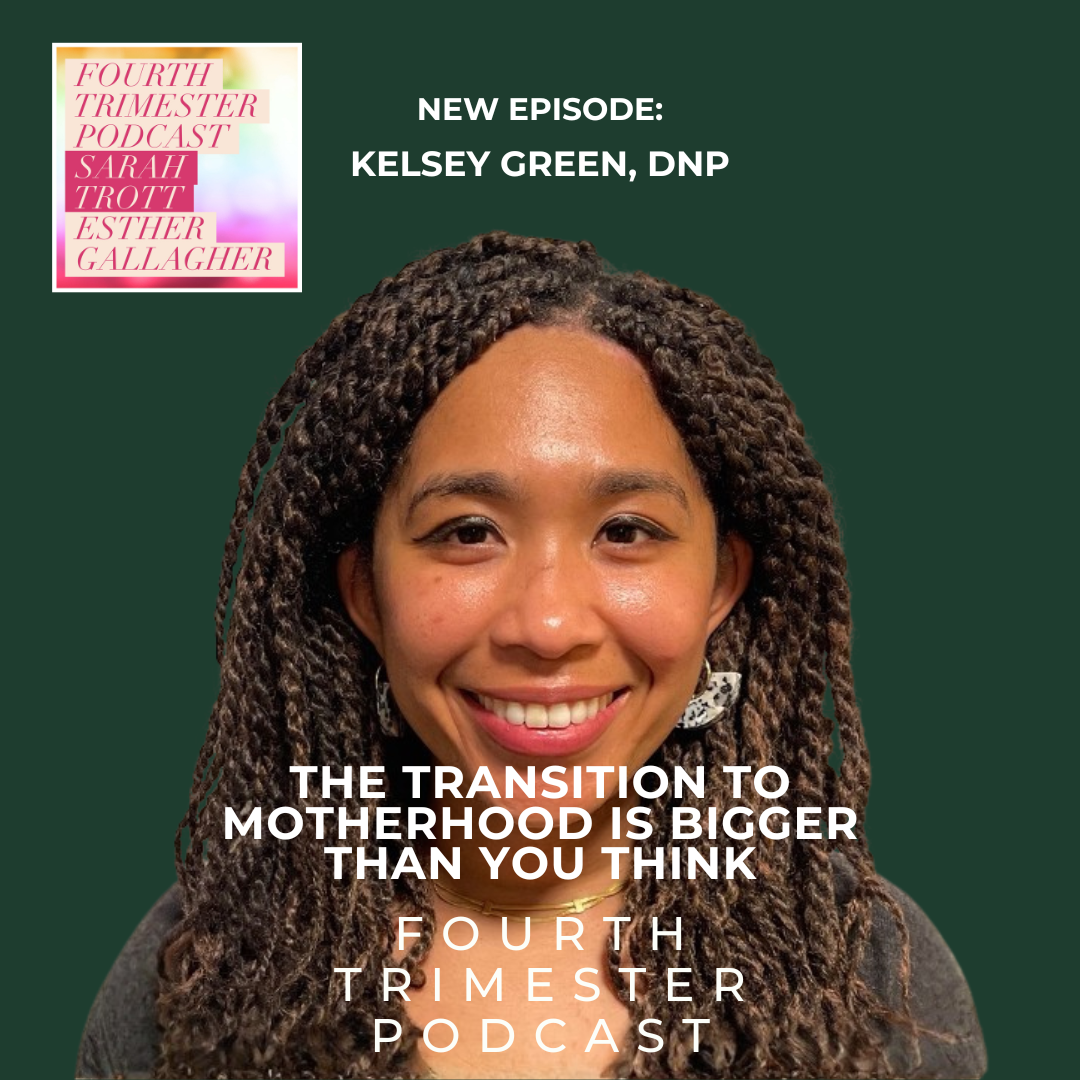
Hear the deeper conversation in What Is Matrescence? Why Becoming a Mother Changes Everything, featuring nurse educator and maternal mental-health researcher Kelsey Green, DNP.
What Support Can Look Like During the Transition to Motherhood
Support is not only emotional reassurance. It can include food, rest, childcare, sleep protection, healthcare, time to recover, help with household responsibilities, space to talk, and people who notice what needs doing without waiting to be assigned every task.
A useful place to begin is with three questions:
- What has changed most for me right now?
- What part of the current load feels hardest to carry?
- Who could help with one specific need this week?
The answer may be practical, relational, medical, emotional, or a combination. If distress feels intense, persistent, frightening, or difficult to manage, contact a qualified healthcare or mental-health professional.
Does the Transition End After the Fourth Trimester?
Not necessarily. Many mothers experience another period of adjustment when a child starts childcare or school, when work changes, when a second child arrives, or when family relationships and responsibilities shift. Understanding motherhood as an evolving identity can make those later transitions feel less surprising.
How Can Partners and Professionals Help?
Begin with curiosity instead of assumptions. Ask what has changed, what support is missing, and what would make daily life more manageable. Listen for both emotional and practical needs. A screening tool or a reassuring phrase may be useful, but neither replaces seeing the parent as a whole person.
A Name Can Open a Conversation
The value of naming the transition is not that one word explains every mother’s experience. It is that the word creates room to talk about change, support, identity, and care.
Listen to the full Fourth Trimester conversation with Kelsey Green, DNP, on the episode page. You can also follow the show on Apple Podcasts or Spotify.
This article is for informational and educational purposes only and is not a substitute for medical, mental-health, or other professional advice. Please check with your medical provider on what is best for you and your family.