Why Control and Certainty Stop Working After You Become a Parent
Many people enter pregnancy and early parenthood believing that preparation, information, and planning will help them feel more in control.
And to some extent, they do.
Researching baby gear, creating a birth plan, reading parenting books, organizing childcare, and preparing the home can absolutely reduce stress and help families feel more supported during a major life transition.
But there is another side to parenthood that often catches people off guard.
The deeper emotional transition into becoming a parent cannot be fully planned for.
That is especially true during the fourth trimester, when identity shifts, sleep deprivation, recovery, relationship changes, and the constant unpredictability of caring for a baby can challenge even the most organized and high-functioning people.
Many parents discover that the strategies they once relied on to feel safe no longer work in the same way.
And that realization can feel deeply unsettling.
Why Parenthood Challenges Our Need for Control
Modern culture places a high value on optimization, certainty, achievement, and performance.
We are taught to solve problems efficiently, make informed decisions quickly, and work toward measurable outcomes.
Those skills can be incredibly helpful in many areas of life.
Parenthood is different.
Babies are not systems to optimize. Families are not perfectly controllable environments. Human development is constantly changing.
A newborn who sleeps well one week may struggle the next. A feeding plan may need to shift unexpectedly. Recovery after birth may take longer than anticipated. Emotional responses can feel surprising and difficult to predict.
For many parents, especially those who are used to succeeding through preparation and control, this unpredictability can create anxiety and self-doubt.
The problem is not preparation itself. We strongly encourage education and preparation!
The problem is believing that perfect preparation can eliminate uncertainty entirely.
The Pressure of “Perfect Parenting”
One of the most difficult myths many parents carry is the belief that there is a correct way to parent and that good parents should somehow know exactly what to do.
This pressure often intensifies after having a baby.
Parents may feel:
- pressure to respond perfectly
- pressure to enjoy every moment
- pressure to recover quickly
- pressure to avoid mistakes
- pressure to stay emotionally regulated at all times
Social media can amplify these expectations by presenting polished versions of parenthood without showing the complexity underneath.
But real parenting is far more nuanced.
Parents can feel grateful and overwhelmed at the same time.
They can love their children deeply while still grieving aspects of their old identity.
They can feel connected one moment and uncertain the next.
These experiences are not signs of failure.
They are part of being human during a major life transition.
The Identity Shift Few People Talk About
One of the most overlooked parts of the postpartum period is the identity shift that happens when someone becomes a parent.
This transition can affect:
- relationships
- priorities
- career identity
- body image
- emotional bandwidth
- confidence
- personal freedom
- sense of self
And unlike many professional or educational milestones, parenthood often begins without a clear roadmap.
There is no perfect formula for how to feel emotionally prepared for every stage.
That uncertainty can feel uncomfortable, especially for people who are accustomed to competence and mastery in other areas of life.
But many experts in perinatal mental health and postpartum support emphasize that flexibility, self-compassion, and support systems matter far more than perfection.
Self-Trust Matters More Than Perfect Control
One of the most valuable skills parents can develop is not perfect control.
It is self-trust.
Self-trust does not mean ignoring evidence or refusing help.
It means learning how to stay connected to your own values, intuition, emotional awareness, and decision-making process even when things feel uncertain.
That can look like:
- asking for support without shame
- adapting when plans change
- noticing when self-criticism becomes harmful
- allowing room for mixed emotions
- recognizing that learning parenthood takes time
Many parents speak to themselves far more harshly than they would ever speak to their children.
But developing a kinder inner voice can make a meaningful difference during difficult moments.
Especially during the fourth trimester.
Why Storytelling and Shared Wisdom Still Matter
For generations, stories have helped humans process major life transitions.
Parenthood is no exception.
Stories can help parents:
- feel less alone
- recognize universal experiences
- understand emotional complexity
- make meaning from difficult transitions
- reconnect with themselves
That is one reason conversations around mythology, storytelling, and rites of passage are becoming increasingly relevant in discussions about postpartum wellbeing and identity.
Not because stories replace evidence-based support.
But because they help people emotionally process change in ways information alone sometimes cannot.
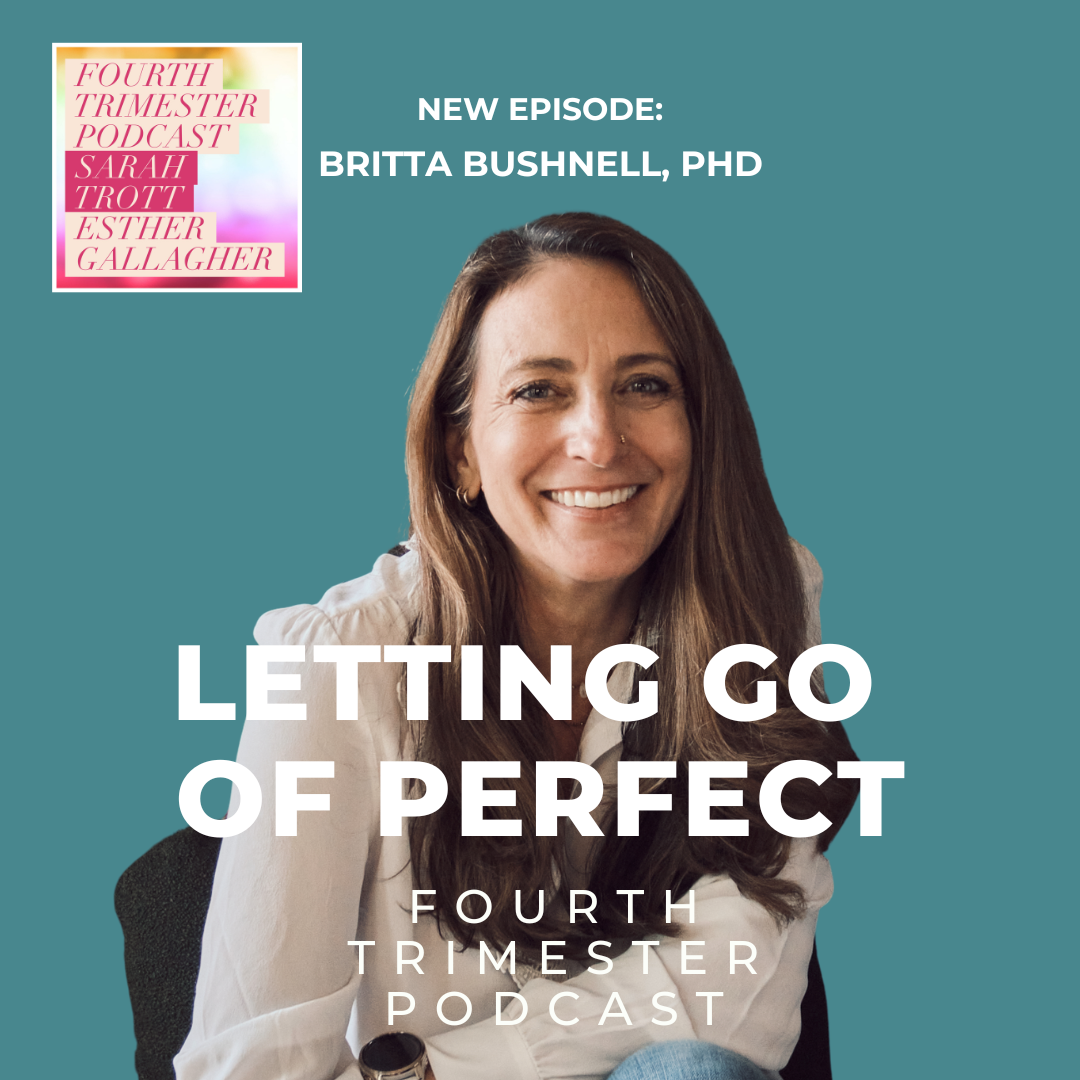
Midway through our recent Fourth Trimester Podcast conversation with Britta Bushnell, PhD, she shares a powerful story about intuition, identity, and reconnecting with inner wisdom during parenthood that adds an entirely different dimension to this topic.
You can listen to the full episode here.
The Fourth Trimester Was Never Meant To Be Perfect
The transition into parenthood is not simply a checklist to complete.
It is an ongoing process of adaptation, learning, and emotional growth.
That process can feel beautiful, disorienting, exhausting, meaningful, and transformative all at once.
And perhaps one of the most important reminders for new parents is this:
You are learning too.
No parent instantly knows how to navigate every stage. No family moves through the fourth trimester perfectly.
Support matters.
Self-compassion matters.
And developing trust in yourself may ultimately matter far more than trying to control every outcome.
For more on self-trust, parenting myths, identity shifts, and emotional resilience during the fourth trimester, listen to the full conversation with Britta Bushnell, PhD here.
Selected links
Connect with Britta Bushnell, PhD brittabushnell.com | Transformed by Birth Podcast | Instagram
Other books The Gifts of Imperfection by Brené Brown | The Case against Perfection: Ethics in the Age of Genetic Engineering
Learn more A Parent’s Guide To Building Self-Trust (And Why It Matters) | Prepare Your Body and Pelvic Floor for Birth and Recovery | Intimacy After Baby and Reconnecting With Yourself and Your Partner
Resources FREE DOWNLOAD Customizable Birth Plan | FREE DOWNLOAD Customizable Fourth Trimester Plan | Postpartum Soups and Stews Collection
Connect with Fourth Trimester Facebook | Instagram
The content provided in this article(s) is provided for informational purposes only and does not constitute medical or other professional advice. Neither Sarah Trott nor Fourth Trimester Media Group LLC are liable for claims arising from the use of or reliance on information contained in this article.